Liberia offers 15 offshore oil blocks, letters of intent due April 15, 2027. A West Point fishing leader says his community wasn't consulted
The LPRA's licensing round covers 12 blocks in the Liberia Basin and three in the Harper Basin. A FrontPageAfrica investigation found no public map of where Liberia's planned marine protected areas will go, and the regulators had not answered its questions.

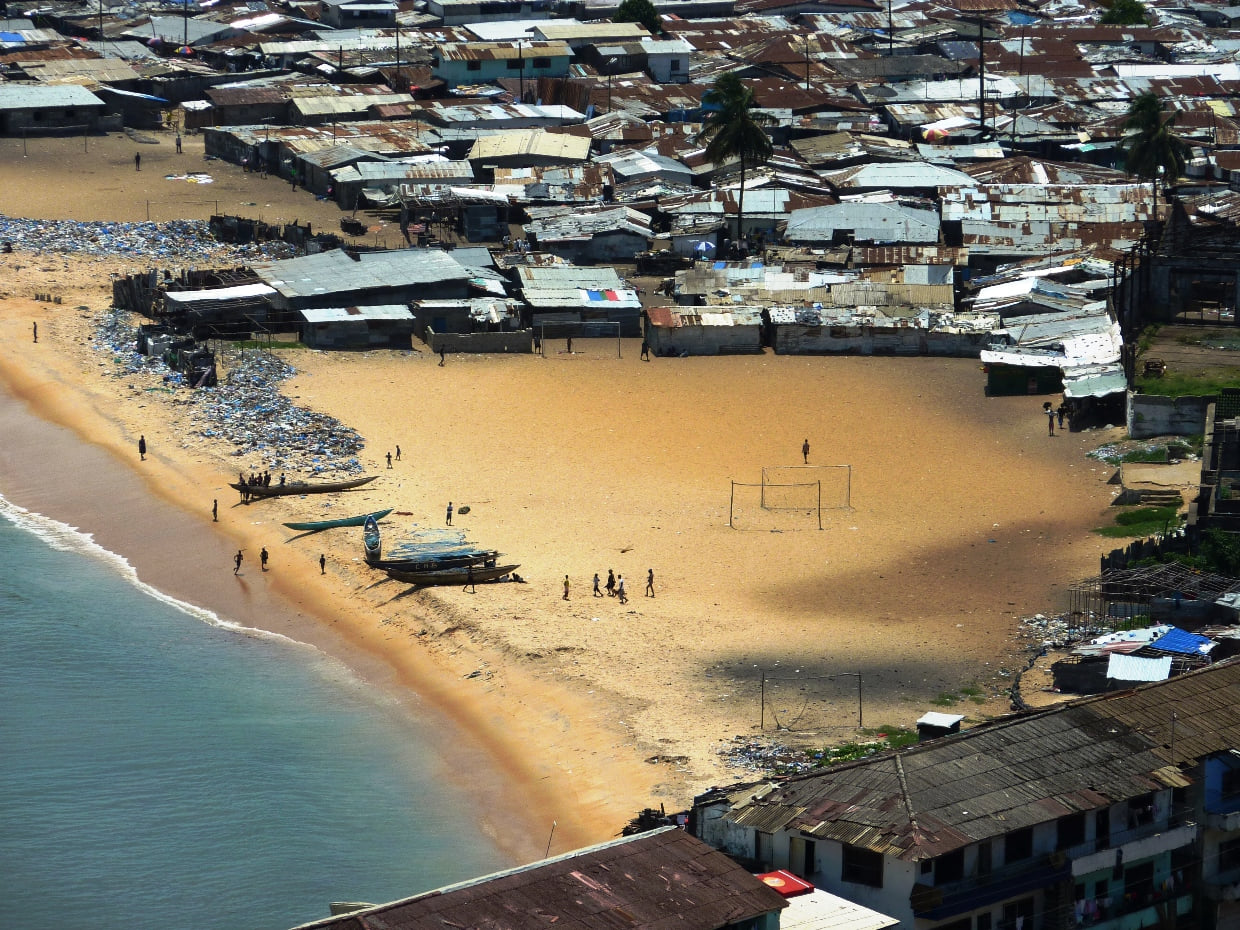
Liberia is inviting oil companies to explore 15 offshore blocks, and the clock is running: letters of intent are due by April 15, 2027. In Monrovia’s West Point fishing community, a local leader told FrontPageAfrica that residents have not been properly consulted.
What is on offer
The Liberia Petroleum Regulatory Authority (LPRA) opened its 2026 Offshore Direct Negotiation Licensing Round on Oct. 14, at the African Energy Week conference in Cape Town (LPRA; Liberian Observer).
- The blocks: LB-1, 2, 3, 7, 12, 13, 14, 18, 19, 20, 21 and 23, a dozen in all, sit in the Liberia Basin; LB-25, 28 and 33 lie in the Harper Basin, according to the LPRA’s invitation, the Observer and African Energy Week.
- The data and depths: the LPRA points bidders to over 50,000 line-km of 2D seismic lines plus some 31,000 km² of 3D surveys (LPRA). Its invitation document describes the 15 blocks as “a mix of deep offshore and shallow water blocks”; five blocks (LB-1, 2, 3, 25 and 28) start at 10 meters (LPRA invitation).
- The model: companies prequalify by showing money, technical skill and offshore experience, then negotiate block by block under the 2014 petroleum law as amended in 2019 (Observer; AEW). Prequalification lasts five years (AEW).
- The pitch: “Whichever company makes the first discovery will play a significant role in the history of our country,” LPRA Director General Marilyn T. Logan told investors. She also stressed an “Explore or Release” rule: companies that miss their work commitments give acreage back (Observer).
President Joseph Boakai, in a video message, said: “No agreement is worth signing unless it works for all parties to it” (Observer).
This is an exploration round. No oil has been found in commercial quantities, and no drilling site has been named.
Seventy years of looking
Liberia has been searching for oil for more than 70 years without a commercial find, by the LPRA’s own account (LPRA). Companies licensed in the late 1960s drilled four wells by 1972, none of them commercial. Amoco drilled three more between 1983 and 1989 and found hydrocarbons, but not enough to develop. After the war, deepwater wells such as Anadarko’s Montserrado-1 (2010) and African Petroleum’s Narina-1 (2012) pointed to what the regulator calls an active petroleum system, yet none justified a field, and most contracts lapsed (LPRA).
The last round did draw takers. TotalEnergies signed for four blocks, LB-6, 11, 17 and 29, in September 2025 (TotalEnergies). The Legislature ratified those and four Oranto Petroleum contracts in December, bringing in US$27 million in signature bonuses before any discovery, the LPRA says (LPRA).
What fishing communities say
Thomas Tweh, a West Point community leader, told FrontPageAfrica that his community had not been properly briefed or consulted on the offshore plans, and that there had been “no direct benefits, no community engagement at the moment.” He estimates that 92% of his community lives off fishing. He wants a support package for coastal households if offshore work hurts their catch (FPA).
Those households are already under pressure. FPA cites a 2025 study in npj Ocean Sustainability, based on 337 interviews along the coast, in which 95% of fishmongers reported fewer fish and 96% reported higher prices. That study looked at industrial trawling, not oil.
The conservation question
Under its climate plan, NDC 3.0, Liberia has pledged, by 2035, to set up two marine protected areas plus four fisheries zones under co-management. According to FPA, no government map has been made public that sets the licensing areas against those planned zones or the main fishing grounds. A 2022 IUCN assessment named three candidate sites, at the Margibi mangroves, Cestos-Senkwehn and Grand Kru-River Gee, and FPA reports that the government has not said which two it will designate.
No answers yet
FPA put questions to the LPRA’s communications team, to Environmental Protection Agency Executive Director Emmanuel King Urey Yarkpawolo, and to National Fisheries and Aquaculture Authority Director General J. Cyrus Saygbe Sr. By publication, none had given substantive answers. Yarkpawolo said he was busy with COP31 and would get back to the paper (FPA).
The questions still open: where the protected areas will be, what environmental assessments the round requires, and whether coastal communities will be consulted before blocks are awarded.
More from Liberia
All Liberia →
From The Signal
Liberia and Africa's top stories, fact-checked, free
When a new briefing is ready
All regular topics by default; Breaking alerts are optional. Confirm by email, then change your picks anytime. Choose topics first. No spam. Unsubscribe anytime.