Liberia's House rejects the OeSD national ID deal and asks for open bidding
Lawmakers turned down a concession with Austria's OeSD International to build the national ID and civil registry, citing conflicting price tags and more than 40 risks. Liberia still needs the system; it just won't get it this way.

- : Update: We added details from FrontPage Africa's Nov. 20 reporting on the joint committee's Nov. 18 report, including its finding of more than 40 defects, the share capital of OeSD's contracting entity, the PPCC's July 2025 order for open bidding and the committee's data-protection findings. See FrontPage Africa.
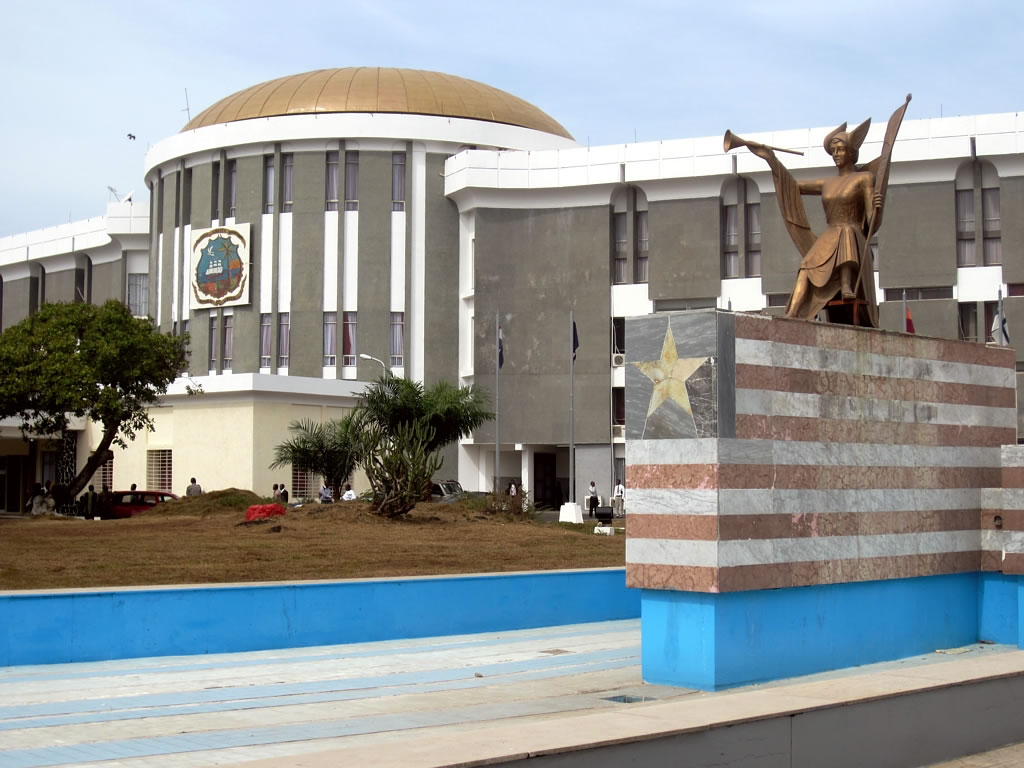
Liberia’s House of Representatives has rejected President Joseph Nyuma Boakai’s proposed concession with OeSD International GmbH, the international arm of the Austrian State Printing House, to build the country’s national ID and civil-registry system. Instead, lawmakers want “an open, competitive and transparent bidding process” (The New Dawn). The Liberian Observer reported that the vote was unanimous.
So how much was the deal worth? That depends on which paper you read, and that’s part of the problem. The Observer’s figure is US$52 million. The New Dawn’s is US$54.7 million. The New Dawn explains the gap: Boakai’s letter to the Legislature put the concession at US$52 million, while the National Identification Registry (NIR) put the investment cost at US$54.7 million. That’s US$2.7 million apart on a single contract, and it was one of the things lawmakers flagged (The New Dawn).
What the House turned down
Boakai forwarded the agreement to the Legislature for ratification on July 15, 2026, according to FrontPage Africa and The New Republic, which quotes his letter. It was referred to the joint committee on Oct. 15, The Liberian Investigator reports. (The New Dawn gives Oct. 15 as the submission date.) It was a Build, Operate and Transfer deal. OeSD would design, supply, install, commission and maintain the National Identification Central Digital Civil Registry and Vital Statistics System (NIDCRVS), one platform integrating national ID, civil registration and vital statistics, and later transfer it to the government (The New Dawn; Liberian Observer). The NIR said OeSD would finance the investment (The New Dawn).
The House rejected it after adopting an adverse joint-committee report. The New Dawn credits the House Joint Committee on Investment and Concessions. DN News Liberia and The Liberian Investigator say it sat jointly with the Committee on Ways, Means, Finance and Budget. The Observer says the joint committee was chaired by Rep. Foday Fahnbulleh. The concerns raised:
- The price tags didn’t match: US$52 million from the presidency, US$54.7 million from the NIR (The New Dawn).
- A missing signature. Earlier copies sent for ratification lacked the signature of OeSD’s chief executive. The document was later corrected, but the missing signature was among the issues that led lawmakers to suspend their first review (The New Dawn).
- More than 40 potential risks. The New Dawn reports that lawmakers cited them. The Observer, citing an Oracle News Daily report on the committee’s findings, adds that lawmakers questioned whether the process met the competition rules in Section 125(1)(a) of the Public Procurement and Concessions Act.
- Who controls the data? The Observer lists revenue sharing, local participation, data ownership and the protection of citizens’ biometric information among the issues.
Why it matters
Liberia has been trying to build a national ID for more than 40 years. The Observer traces the effort from the People’s Redemption Council’s Decree No. 65 of 1983, through the first cards, reportedly issued in 1987, to the National Identification Registry Act, which then-President Ellen Johnson Sirleaf signed on Aug. 1, 2011. Even now, the Observer notes, the National Elections Commission, the Immigration Service and the passport authorities each run separate identity databases that don’t add up to one national system.
The deal’s real cost was never just the headline number, which is why the House was right to ask for the arithmetic. The New Republic, citing Annex 5 of the agreement and a May 2026 memorandum with Ecobank Liberia, reports that OeSD would receive 65% of designated fee revenue from the system and the government 35%. The Liberian Investigator says the joint committee’s report describes the same split. The New Republic adds that OeSD’s own financial annex projects about US$107 million in fees over the 10-year concession, roughly US$69.5 million for the company and US$37.4 million for the government. Those are projections, not money collected, and The Signal has not seen the annex or the committee report.
Data is the other big question. According to the Observer, the system was reportedly designed for up to 10 million biometric records in a country of about 5.5 million people. NIR Executive Director Andrew Peters had previously said the data would be stored in Liberia and that OeSD would not control it. Several Liberian tech firms also complained they were shut out. DN News Liberia reported that some claimed they could deliver the system for less than US$20 million. The Observer cites that report and stresses that those are the companies’ own claims, not independently verified figures.
Update, Nov. 20: what the committee report says
FrontPage Africa has now published details of the joint committee’s report, dated Nov. 18, 2026 (FrontPage Africa). The Signal still hasn’t seen the report itself, so everything below is FPA’s account of it.
- “Over 40 distinct defects.” The committee said several were “statutory violations that occurred prior to execution,” which ratification could not cure. It urged the House to “reject and decline ratification” of the agreement “in its entirety.”
- A small contracting company. OeSD’s Vienna-registered contracting entity has share capital of just 35,000 euros, according to the report.
- No competition. The committee found that the agreement cites no Certificate of Concession, which the PPCC’s amended 2026 regulations say makes such a concession “void.” In July 2025, the PPCC had rejected restricted bidding and ordered open international competitive bidding, an order the committee says “was never followed.” Rival firms came forward before the contract was signed on April 30, 2026.
- Data protection. The committee found nothing in the contract requiring primary or backup data to be hosted in Liberia, or requiring the government to hold the root encryption keys to citizens’ biometric records. It also found that the contract gave OeSD the exclusive right to assign National Identification Numbers, a power the NIR Act of 2011 gives the NIR.
- A data center Liberia already has. The contract charges $19.82 million for a data center, even though state-owned LIBTELCO already runs one where the system could be co-located, according to testimony from the Liberia Information Technology Consortium (LITCON), and the committee agreed.
- No IDs in the meantime. Card issuance has been suspended since June 2025, FPA reports.
NIR Executive Director Andrew Peters has defended the deal. In September, he told FPA that Liberian identity data would remain “a national asset under the authority and control of the Republic of Liberia.” FPA says he hadn’t responded to its detailed questions about the committee’s findings by press time. FPA also cites unnamed sources who say the President was misled by aides who pushed the deal. The Signal can’t verify that claim and is reporting it only as FPA’s account.
What’s next
To be clear: lawmakers rejected this concession, not the idea of a national ID. The New Dawn says the vote now puts pressure on the Executive to run a competitive procurement that answers the House’s concerns. None of the reports carried a fresh response from the Executive Mansion, the NIR or OeSD. What to watch: whether the government re-tenders, and whether a new deal comes with an independent cost estimate and binding data-protection terms. The Observer argues both are needed.
More from Liberia
All Liberia →

From The Signal
Liberia and Africa's top stories, fact-checked, free
When a new briefing is ready
All regular topics by default; Breaking alerts are optional. Confirm by email, then change your picks anytime. Choose topics first. No spam. Unsubscribe anytime.