Democrats reach at least 259 House seats; Hubbard unseated Foxx
The AP counts at least 259 after Tennessee's call on Tuesday, with three races uncalled. NBC and The Washington Post reported 258 and four uncalled on Sunday, after North Carolina's call.

- : Update: The story reported that Democrats had reached at least 258 House seats with four races uncalled, as NBC and The Washington Post reported on Nov. 22. The Associated Press reported on Nov. 24 that Democrats reached at least 259 after Victoria Broderick won Tennessee's 4th District over Rep. Scott DesJarlais, leaving three races uncalled; Ballotpedia shows the same counts. The story now gives both counts and dates. The headline was shortened to meet the house 66-character limit and now says 259. The web address still contains 258.
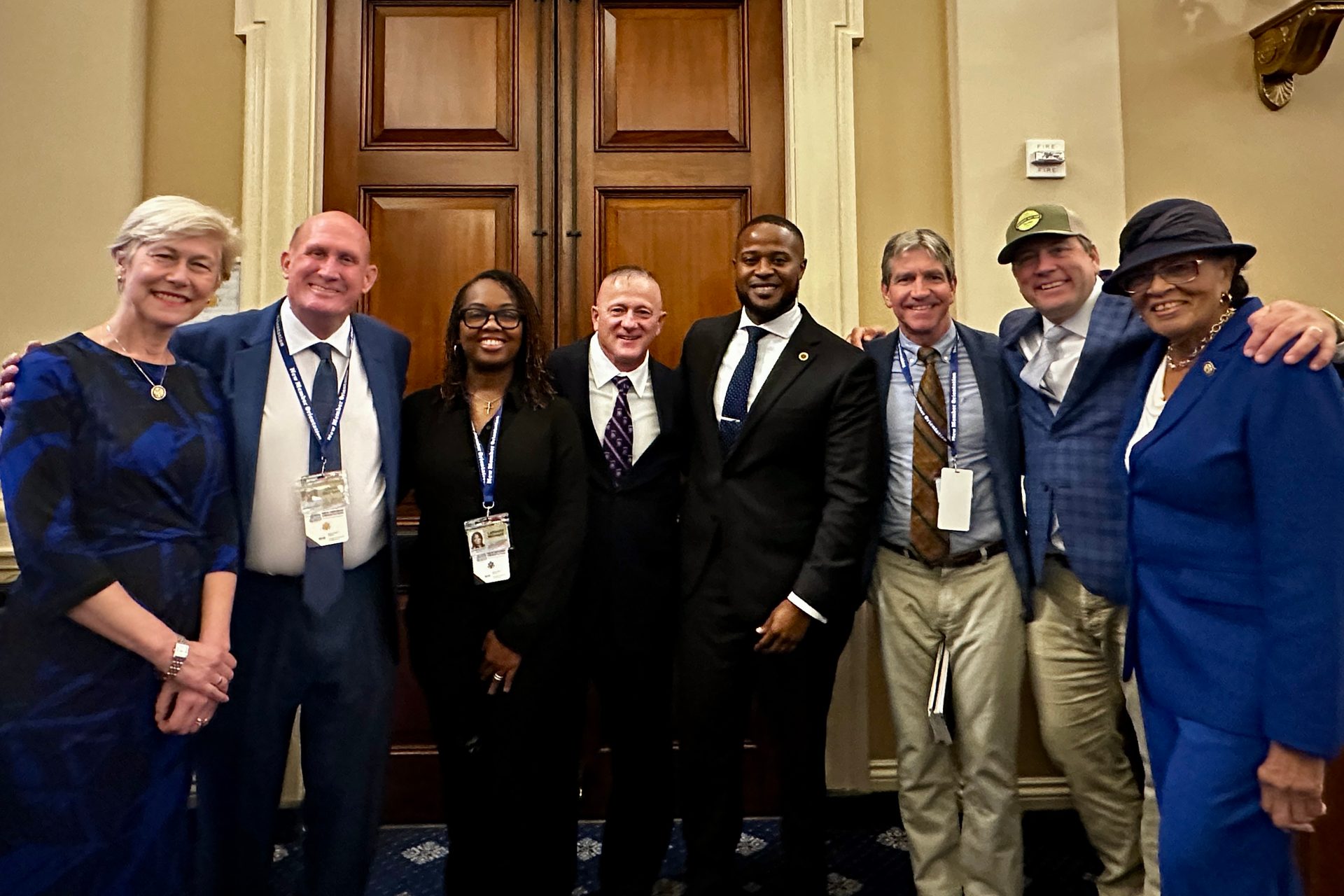
Update, Nov. 26: The Associated Press now counts at least 259 seats for House Democrats. It reached that number on Tuesday, Nov. 24, when Victoria Broderick, a Democrat, won Tennessee’s 4th District over Republican Rep. Scott DesJarlais. Three races remain outstanding (AP, via ABC News).
On Sunday, Nov. 22, House Democrats had reached 258 seats for the next Congress, after Chuck Hubbard was projected the winner over Republican Rep. Virginia Foxx in North Carolina’s 5th District (NBC News; The Washington Post, Alfaro).
That figure is not yet the final majority. NBC and The Washington Post both said four House races remained uncalled when they published on Sunday afternoon. AP says three remain, in Minnesota and Louisiana; both Louisiana contests go to a runoff in December. Ballotpedia shows the same split as of 11:49 a.m. on Nov. 24 (259 Democratic seats, 173 Republican, three uncalled) and still did on Nov. 26, naming Louisiana’s 5th and 6th districts and Minnesota’s 1st. The total can still rise. It should not be described as complete.
On Sunday, NBC, citing the Office of the House Historian, said 258 would be the largest House majority either party has held in this century, and the largest Democratic majority since 1992, when Democrats also won 258 seats. The same report said Democrats held 257 seats after the 2008 election, their next-largest total this century. The Washington Post, in a separate Sunday story, also described 258 as the party’s largest House majority of the 21st century and said Democrats would enter the 120th Congress on that basis.
At 259, the AP calls the result the party’s biggest since the 1990 election, ahead of the 258 of 1992 and the 257 of 2008. The House Historian’s party-division table lists 267 Democrats in the 102nd Congress (1991–1993), 258 in the 103rd (1993–1995) and 257 in the 111th (2009–2011).
The North Carolina race that crossed the threshold
NBC projected Hubbard, a Democrat, to win by a fraction of a percentage point after a recount that Foxx requested following Election Day. The Washington Post, in its race story, described Hubbard as a former journalist and noted that the Cook Political Report had rated the district as likely Republican (The Washington Post, Jira).
NBC reported that President Donald Trump’s 2024 margin in that district was almost 18 points, according to the network’s Decision Desk.
NBC, citing a person familiar with the conversation, said Foxx called Hubbard earlier on Sunday to concede. In a post on X quoted by NBC, Hubbard wrote: “Earlier today I spoke with Congresswoman Virginia Foxx who graciously conceded following the results of the recount process. Let me be the first to thank Congresswoman Foxx for her decades of service and countless sacrifices.”
The Signal did not independently open that post, and reports the wording as NBC published it.
A wider North Carolina shift
Foxx was not the only North Carolina Republican to lose a seat that had looked secure heading into Election Day, NBC said. It reported that Democrats flipped seven Republican seats in the state, more than in any other state.
In the 9th District, NBC said the Democratic winner was Rep.-elect Richard Ojeda II, over Republican Rep. Richard Hudson, who chaired the National Republican Congressional Committee this year. In another contest, it named Rep.-elect Cyril Jefferson as the Democrat who beat Republican Rep. Addison McDowell. The same report put Trump’s 2024 margins in those two districts at 16 points and 17 points, respectively.
Those earlier North Carolina results were already part of the party’s national gains. Sunday’s call on the 5th District is what both NBC and The Washington Post treated as the point at which the Democratic caucus reached 258.
What 259 means, and what is still open
A majority in the 435-seat House is 218. A working majority of 259 gives Democrats far more room than a bare majority, but the uncalled races mean the exact size of the caucus is still unknown. NBC did not name the four outstanding contests in the report opened for this story; AP and Ballotpedia name the current three as Minnesota’s 1st and Louisiana’s 5th and 6th districts. The Signal did not see which four races NBC and The Washington Post counted on Sunday, so it cannot say whether Tennessee’s 4th was among them. Ballotpedia credits a CNN projection of Broderick on Nov. 19; the AP call came Nov. 24, so tallies can differ by outlet.
The Historian comparison, as relayed by NBC, is about the modern period. It is not a claim that 258 is large by the standards of much earlier congresses, when majorities were sometimes far bigger.
Sunday’s reporting also does not settle how the new majority will use that margin, or whether later recounts or certifications could still change an individual race. The Signal will update this story if the remaining contests are called or if the 259-seat count changes.
More from US
All US →- Illustration: The Signal
- Photo: Carl Lender, CC BY 2.0
- Map: Alexrk2, CC BY 3.0


From The Signal
Liberia and Africa's top stories, fact-checked, free
When a new briefing is ready
All regular topics by default; Breaking alerts are optional. Confirm by email, then change your picks anytime. Choose topics first. No spam. Unsubscribe anytime.