Liberia launches its first major foreign-policy restatement since 1971, with investment and women at the center
Boakai launched a new foreign policy statement and a gender-responsive policy on Tuesday, weeks before Liberia takes the U.N. Security Council presidency. The hard part is everything after the launch.
- Fact-checked by The Signal editorial desk (AI-assisted),
- Approved by Joseph Dorbor,
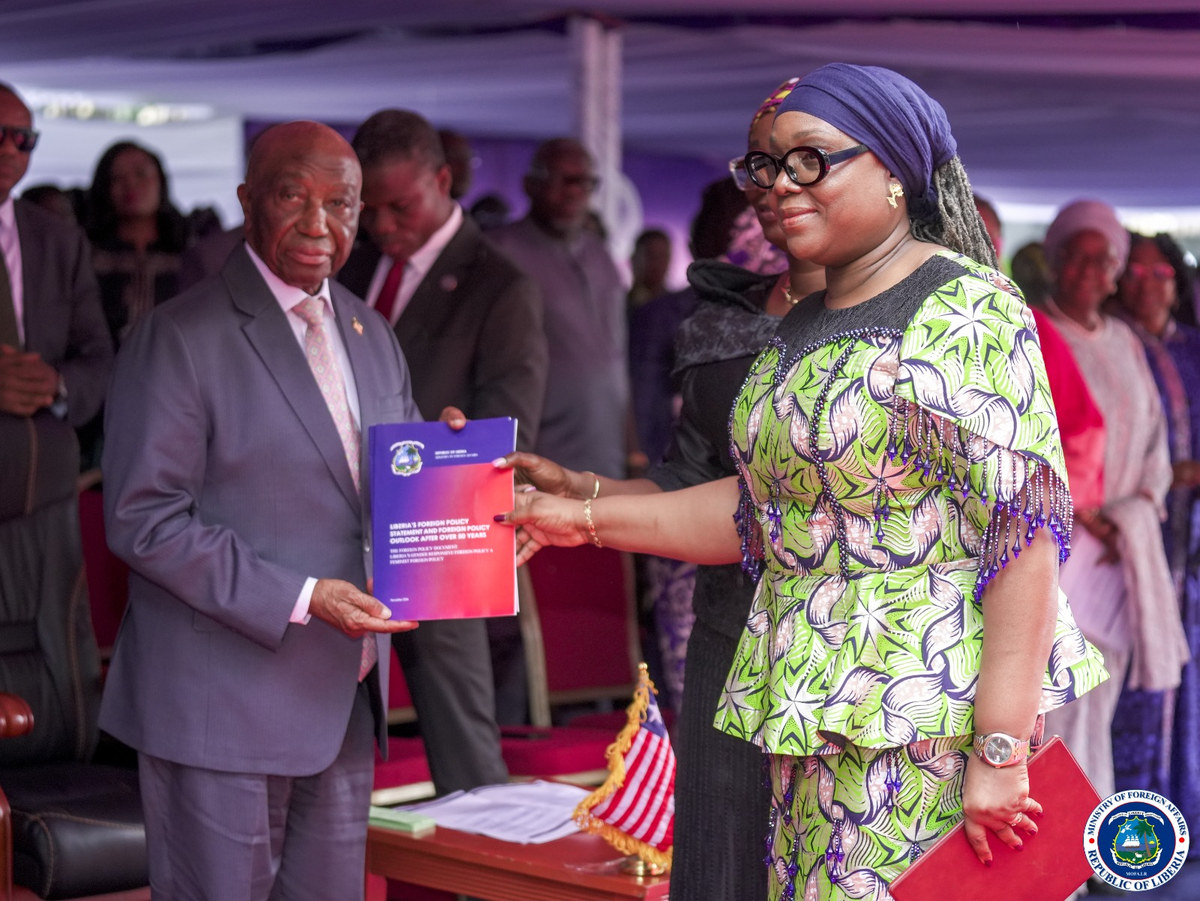
Liberia has launched what the Liberian Observer calls the first major restatement of its foreign policy since 1971, when William R. Tolbert Jr. was president. On Tuesday, Nov. 17, President Joseph Nyuma Boakai launched a revised Foreign Policy Statement and a companion Gender-Responsive Foreign Policy at the Ministry of Foreign Affairs in Monrovia (Liberian Observer; FrontPage Africa).
The timing isn’t subtle. In December 2026, Liberia takes the presidency of the U.N. Security Council, having won a non-permanent seat for 2026–2027 with 181 votes in June 2025 (Liberian Observer).
What changes
The short version: embassies are supposed to start acting like investment offices. Boakai set out five pillars: protecting sovereignty and resilience; economic diplomacy; protecting citizens and engaging the diaspora; leadership on regional and international peace and security; and technological competitiveness. He leaned hardest on economic diplomacy, telling Liberia’s missions to chase investment in agribusiness, mining, infrastructure, tourism, manufacturing and the digital economy (Liberian Observer).
He also said Liberia’s minerals, forests and land must be managed transparently so they “never again fuel conflict” (Liberian Observer). For a country whose civil wars were bound up with its natural resources, that line carries weight.
One caveat for policy nerds: the Observer reports that Ambassador B. Elias Shoniyin, who presented the framework, listed a different set of five pillars. His covered peace and security; economic diplomacy and investment; sustainable development and environmental protection; diaspora engagement and cultural diplomacy; and institutional strengthening, digital diplomacy and professional service delivery. The published document will have to settle which list is official.
“Feminist” or “gender-responsive”?
Both labels are in circulation. The Observer calls it a Gender-Responsive Foreign Policy with five pillars of its own: women’s rights; economic empowerment and inclusive trade; women, peace and security; climate justice and natural-resource governance; and political representation. FrontPage Africa calls it a feminist foreign policy. The difference isn’t only about wording. Foreign Minister Sara Beysolow Nyanti acknowledged that some African stakeholders had reservations about the word “feminist” when the roadmap was presented in Addis Ababa in February 2025, but said the government kept its commitment (Liberian Observer).
Nyanti’s case for it: “A foreign policy speaks for the whole nation. It cannot speak fully for Liberia if half of Liberia is missing from the room” (Liberian Observer). Dr. Tanya A. Garnett, who presented the gender framework, said the ministry plans to reform recruitment, promotion and work-life policies and turn its gender unit into a Gender and Social Inclusion Unit in December 2026. “We cannot credibly advocate for gender equality abroad if we have not addressed it at home,” she said (Liberian Observer).
The Legislature says it is on board. Rep. Nehker E. Gaye, chair of the House Foreign Affairs Committee and the lawmaker for Nimba County District 3, said legislators would work to turn the policy into “enforceable laws, appropriate budgetary allocations, effective oversight mechanisms, and strengthened institutions” (FrontPage Africa). Rep. Ellen Attoh-Wreh, who chairs the Women Legislative Caucus, said the gap at home is stark: “at the Legislature, we currently have only 11 women representing the interests of women across Liberia.” She added that efforts to pass an Affirmative Action Bill have failed (FrontPage Africa).
Why it matters
Turning embassies into deal-hunters is a sensible bet. But investors respond to predictable rules, transparent concessions and working infrastructure, not just diplomatic introductions, as the Observer points out. That’s awkward timing in a week when the House rejected the government’s national ID concession over transparency concerns.
What’s next
The ministry is drafting a Strategic Plan, an Economic Diplomacy Strategy and a proposed Code of Conduct for diplomats, and Nyanti said the next three years would focus on making the reforms stick (Liberian Observer). The first public test comes in December, at the Security Council. Boakai put it best himself: “A policy on paper is only a beginning. What matters is what we do next” (Liberian Observer).
Sources & verification
Verified Key facts confirmed by a primary source or at least two independent credible sources.
- Liberian Observer: Gov't bets on economic diplomacy, gender equality (Nov 19) Secondary accessed
- FrontPage Africa: Liberia introduces feminist foreign policy, garners Legislature's support (Nov 19) Secondary accessed
- Fact-checked by The Signal editorial desk (AI-assisted),
- Approved by Joseph Dorbor,
For information only, not financial, investment, legal or medical advice. Items labeled Developing or Unverified may change. Linked posts and sites aren't endorsements; illustrations are artwork, not photos. Disclaimer
Liked this? Get the daily briefing in your inbox.
Pick the topics you want, from Liberia and Africa to business, tech and sports, or get Everything. Fact-checked and free.
Subscribe